Posts

Showing posts with the label Japanese form

U - Uta: Urban Showers

Image
U ta (Japanese lyric poetry) is the general term for Japanese poems, especially waka (most common a tanka), and also includes older forms like chōka and sedōka.  I have written a tanka.  U rban Showers is my title for this ink on newsprint by Mary  Pedri.  In a previous life it won an award at the 1963 Lodi Grape Festival and National Wine Show.  That's Lodi, California.  It was a birthday gift from one of my sons, who found it at Goodwill.   wet pavement glimmers under the dim sidewalk lamps commuters rush to taxi stands and bus shelters autumn rain in the city ©202 6 Lisa Smith Nelson. All Rights Reserved  

S - Sedoka: Sudden Showers

Image
  The S edoka form is believed to have originated in ancient Japan. It is often written in pairs, with two consecutive S edoka poems forming a larger poem know n as a K atauta . The two S edoka poems are typically connected thematically and often tell a story or express a single idea or emotion.  Mine is a pair written from the viewpoint of a husband and wife.  S edoka are short, three-line poems that share many features with haiku. But they are arranged in a different syllable pattern, 5-7-7 rather than 5-7-5. S udden S hower over S hin-Ohashi Bridge , by Hiroshige Atake.  My print is either a late Edo-period (1857-1868) or early Meiji impression (late 1860s-1870s), both considered "original period" impressions printed from the original blocks, using the same pigments and techniques as the first edition (1857).  There would be a seal to date it more accurately, but it's currently matted and framed so the seal cannot be seen.   How it came to be in m...

I - Imayo: Inés

Image
The I mayo is a 4-line Japanese poem that has 12 syllables in each line. There is a planned pause (caesura)) between the first 7 syllables and the final 5 in each line.  I created those pauses as best I could!  The I mayo was originally written to be sung, but that's not a requirement. Poets have free range on subject matter. I nés  is my name for this painting on canvas I found unrolled in the dirt of a yard sale.  I got it for under $1.00.   She watches out the window, as she often does. Light shines behind her; there's a gap in the curtains. Her vigil began at dawn, it is evening now. Soon she'll sigh, close the gap, and slowly climb the stairs. ©202 6 Lisa Smith Nelson. All Rights Reserved  

24 Seasons: Hakuro 白露 (White Dew)

Image
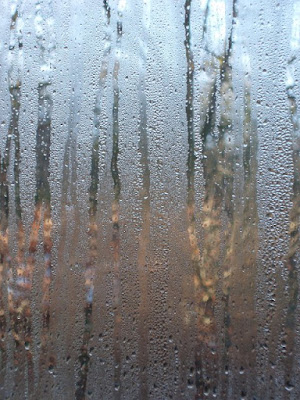
   24 Seasons Syllabic Poetry Challenge, No. 50 White Dew (September 7 – 22) Hakuro 白露 "Your writing invitation is to write tanka prose with me! The use of the kigo words are OPTIONAL. If they work for your poem, use them." I have used the kigo word Dew in my tanka prose.  It was just today when the first morning condensation was on my windshield.   So welcome was the sight, I took it's picture!  You know it's been a long summer when condensation is photo-worthy! The days are still hot.  90s and low 100s hot.  However, the nights are finally cooling, making it easier to sleep in a non-air conditioned room.   The most obvious sign that autumn is nigh is today was the first morning there was condensation on the car windshield.  It may not be as romantic as spring’s first blossom, or winter’s first snow flake, but after the summer I've had it’s the most welcome.   dew coats the windows an early morning surprise obscuring my ...

24 Seasons: Taisho 大暑 (Sweltering Heat)

Image
24 Seasons Syllabic Poetry Challenge, No. 44 Sweltering Heat (July 22 – August 6) Taisho 大暑 "Your syllabic poetry writing invitation is to choose a kigo word or phrase from the seasonal kigo list on the post, or you can choose from the summer category for the Northern Hemisphere, or winter/spring category for the Southern Hemisphere on the kigo word list links below. Share your kigo word on your post... You must use one kigo word or phrase in your syllabic poem." As I am currently under Sweltering Heat conditions (outside... as well as in, as my bathroom floor is being replaced and right now drying with the help of three industrial dehumidifiers) I was quite inspired by a few of the kigo words and phrases this week! I choose " blazing sun ," " summer rain storms ," " melon " (or type of melon), and " summer naps ." blazing sun fire in the sky  at daybreak  blazing sun  ice cold honeydew  summer snack cool watermelon  my anticipation g...

24 Seasons: Geshi 夏至 (The Summer Solstice) No. 41

Image
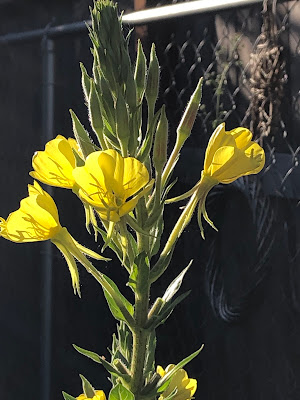
24 Seasons Syllabic Poetry Challenge, No. 41 The Summer Solstice (June 21 – July 6) Geshi 夏至 "This week: Your writing invitation is to choose one of the 24 Forms for your poem. You can use the kigo words and phrases from the Part I challenge post HERE , or you can use the phrases I’ve created...  Use one kigo phrase in each of your three poems in whatever order you’d like. " I chose " summer celebrations" and " melons " from Colleen's phrase list, and "ants" and "evening primrose," found here .  Yes, four instead of the requested three. Three haiku and a tanka.  The tanka is a true memory.  As a child, in the cool of the summer evenings my father would call to me, "The Oenothera is opening!"  I'd come running to watch the papery petals slowly unfold as we watched, standing side by side.  A dry time of year these summer celebrations fireworks rain down hot anticipation juice dribbles cool down my chin Hermiston...

24 Seasons: Geshi 夏至 (The Summer Solstice) No. 39

Image
24 Seasons Syllabic Poetry Challenge, No.39 The Summer Solstice (June 21 – July 6) Geshi 夏至 " Your syllabic poetry writing invitation is to choose a kigo word or phrase from the seasonal kigo list on the post, or you can choose from the summer category on the 500 kigo word list links below. Share your kigo word on your post. " I chose the kigo words " Strawberry Moon " and " Cicadas ." I gather berries light from the strawberry moon sufficient this dawn loud in the dappled shadows  cicadas buzz their love songs ©2024 Lisa Smith Nelson. All Rights Reserved #tankatuesday #kigo #tankatuesdaypoetrychallenge #tankatuesday24seasons #tanka #syllabicpoetry #cicadapoetry #strawberrymoon  

24 Seasons: Koku 穀雨 (Grain Rain) No. 32

Image
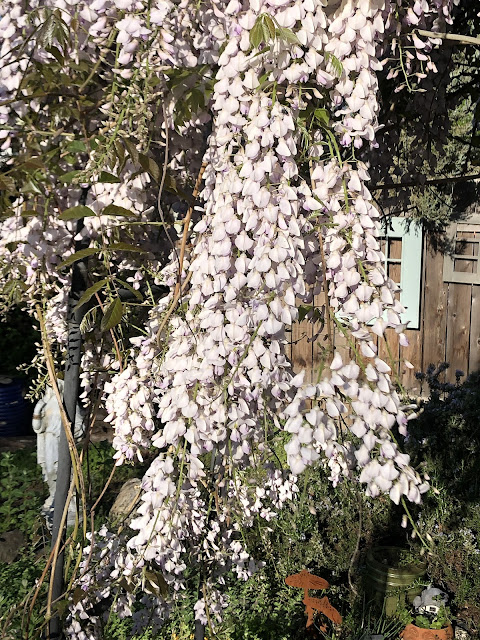
  24 Seasons Syllabic Poetry Challenge, No. 32  Grain Rain (April 19 – May 4) Koku 穀雨 " This week: Your writing invitation is to experiment with the renga form. " " I’ll give you the hokku portion for the Northern & Southern Hemispheres, and you write the wakiku portion. (I’ll add the kigo words to the hokku).  BONUS: After you write the wakiku in reply to my hokku, please add your own hokku (haiku) on your post. In the comments on your post, I’ll add the wakiku portion! " an empty attic the sound of April showers thunderous rumblings so different from winter's silent snowfalls on my roof For my hokku I have used the kigo "wisteria," as mine is blooming. with lilac petals the wisteria perfumes the air as we pass ©2024 Lisa Smith Nelson. All Rights Reserved  #tankatuesday #kigo #tankatuesdaypoetrychallenge #tankatuesday24seasons #rengapoem #renga  #syllabicpoetry #wisteria

24 Seasons: Keichitsu (Wintering Insects Awake) No. 24

Image
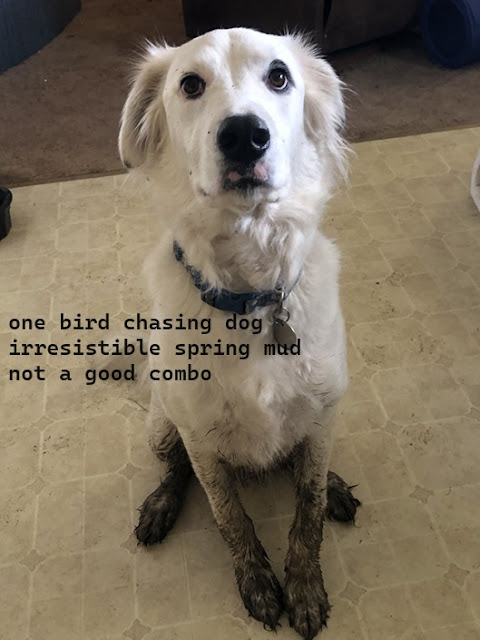
 24 Seasons Syllabic Poetry Challenge, No. 24  Wintering Insects Awake (March 5 – 19) Keichitsu 啓蟄 " Your syllabic poetry writing invitation is to choose a kigo word or phrase from the seasonal kigo list on the post, or you can choose from the spring category on the kigo word list links below. Share your kigo word on your pos t." It's been raining.  It's been snowing.  Then more rain.  It's muddy.  Very, very muddy.  So, what kigo phrase would be more fitting right now than Spring Mud ?  Nothing I can think of.   It was made for me considering I took the photo below just two days ago!  I wrote a h aiga . ©2024 Lisa Smith Nelson. All Rights Reserved #tankatuesday #kigo #tankatuesdaypoetrychallenge #tankatuesday24seasons #haiga #syllabicpoetry 
24 Seasons: Risshun (The Beginning of Spring) No. 21

Image
  24 Seasons Syllabic Poetry Challenge, No. 21 The Beginning of Spring (February 3 – 20) Risshun 立 " ... write a poem using one of the 24 forms—your choice. Choose a kigo word or phrase from the seasonal kigo list on the post. Or you can select from the Winter and Early Spring categories ( Yuki Teikei Haiku Society ) or select from the kigo word list links below. Share your kigo word on your post ." My choice from the 24 forms is a mondo .  My kigo phrases are " lingering cold ," " crisp weather ," and a rewording of " remaining snow ."  Peas do get planted in February here in Southern Oregon. Why are you planting seeds in the lingering cold while snow remains in the shade? Crisp weather sowing is just right for the snap peas  you love so well in stir-fry. ©2024 Lisa Smith Nelson. All Rights Reserved  #tankatuesday #kigo #tankatuesdaypoetrychallenge #tankatuesday24seasons #mondopoem #mondo #tanka #syllabicpoetry 

Pure Haiku - Three Trees

Image
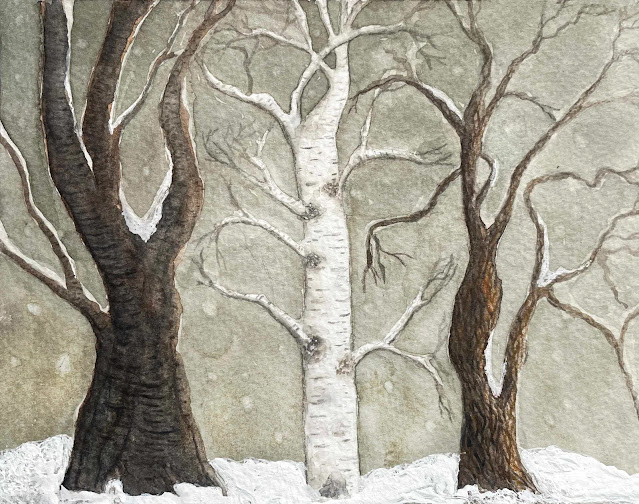
 I am honored to have one of my haiku accepted for publication on Pure Haiku.  The theme was this image prompt.  The link to Pure Haiku became live today, and the haiku is below. https://purehaiku.wordpress.com/2024/02/09/2-9/ credit: Elisa Ang 2 – 9 the gods are absent freezing snow falls with no check the shrines all empty © Lisa Smith Nelson 2024 The gods being absent, and the shrines empty, refer to the Japanese season of early winter (in November), and the kigo phrase " the gods are absent ."  This is the season after the harvest when the Japanese gods have finished their duties and have left the shrines for a well deserved rest.  They gather to celebrate at the Grand Shrine of Izumo, one of the most important and ancient of the Japanese shrines, leaving all the others empty. 

24 Seasons: Risshun (The Beginning of Spring) No. 20

Image
 24 Seasons Syllabic Poetry Challenge, No. 20 The Beginning of Spring (February 3 – 20) Risshun 立 " ...choose a kigo word or phrase from the seasonal kigo list on the post, or you can choose from the Winter and Early Spring categories ( Yuki Teikei Haiku Society ) on the kigo word list links below.  Share your kigo word in your post. " I chose, for a tanka and a haiku, " shallow spring ," " lingering cold ," " cats in love ," and a take on " plum blossoms ," using plum buds, as my plum blossoms (actually a pluot) are only buds at this point.  The cats have been " in love " outside the windows in the night for the past week. this pale shallow spring flowering quince disregards the lingering cold plum buds swollen with promise outside my frosted windows cats in love shrieking nocturnes - shadows under dim shallow spring moonlight ©2024 Lisa Smith Nelson. All Rights Reserved  #tankatuesday #kigo #tankatuesdaypoetry...
Untitled Haiku - February 5, 2024

Image
Ronovan Writes Weekly Haiku Challenge #500 words: story and wane photo: my life's story told in forward and backward steps in waxes and wanes   ©2024 Lisa Smith Nelson. All Rights Reserved  #haiku #ronovanswrites #weeklypoetryprompt #syllabicpoetry #japanesepoetryform 
24 Seasons: Shosetsu (Light Snow) No. 10

  24 Seasons Syllabic Poetry Challenge, No. 10 Light Snow (November 22 – December 6) Shosetsu 小雪 " The 24 Seasons Syllabic Poetry challenge is inviting participants to write three dodoitsu, a form of Japanese poetry, following a 7-7-7-5 syllable count pattern. Each poem should contain a specified kigo phrase relating to either the northern or southern hemisphere ."  Use one kigo phrase in each of your three poems. #1: “early winter dusk” #2: “chilly north winds blow” #3: “warmth around the hearth” in the neglected flower beds the browned leaves swirl, a wild dance a last bright petal rises chilly north winds blow strive to keep my usage down make do with nature’s lighting it’s harder in December early winter dusk  sparks fly from the shifting log small out-of-season sparklers  children squeal in mock alarm  warmth around the hearth  ©2023 Lisa Smith Nelson. All Rights Reserved #tankatuesdaypoetrychallenge #tankatuesday24seasons #dodoitsu #kigo #japanesepo...

24 Seasons: Ritto (The Beginning of Winter) No. 7

Image
  Tanka Tuesday 24 Seasons Syllabic Poetry Challenge No. 7    The Beginning of Winter (November 7 – 21) Ritto 立冬 "... choose a kigo word or phrase from the seasonal kigo list on the post, or you can choose from the autumn category... Share your kigo word on your post ." I have chosen " ramen " from the list In Our Lives , and " close the north windows ," found here . image close the north windows  let the panes fog with the steam  of fragrant ramen  ©2023 Lisa Smith Nelson. All Rights Reserved #tankatuesdaypoetrychallenge #tankatuesday24seasons #haiku  #kigo #japanesepoetry #24seasons #ritto
24 Seasons: Shubun (Autumn Equinox) No. 1

Image
 Tanka Tuesday 24 Seasons Syllabic Poetry Challenge No. 1  The Autumn Equinox (September 22 – October 7) Shubun 秋分  " You must use one kigo word or phrase in your poem.  Please add your kigo word or phrase on your post... You can create a poem from the 24 forms listed. " I chose to use a kigo phrase from the resource found here ,  https://worldkigodatabase.blogspot.com , first rains .  This resource is very helpful; I learned that rain itself   is not a kigo.  The first rain of the season happened just yesterday, after a long hot, dry summer in southern Oregon.  The photos accompanying the haiku sequence were taken this morning. right on time first rains usher forth winged termites   first rains bead to flow down petal revive rose petals gleam bejeweled by the first soft rains dampwood winged termites (alates) swarming ©2023 Lisa Smith Nelson. All Rights Reserved #tankatuesday #haiku #24seasonssyllabicpoetrychalle...

Untitled Haiku - January 23, 2023

Image
 Ronovan Writes Weekly Haiku Challenge #446 words: chirp and hello  photo credit chirp hello little cricket in your bamboo cage bring me luck today   ©2023 Lisa Smith Nelson. All Rights Reserved #ronovanwrites #weeklypoetrychallenge #haiku #micropoetry #micropoem #syllabicpoetry #syllabicpoem #cricketpoem 

The Wind

 Tanka Tuesday Weekly Poetry Challenge No. 297 Reena's choice for this week's specific form is the kouta, a Japanese four-line form.  New wind chimes tink in the night louder than by day. I will have to take them down, keep neighborhood peace. The neighbor's dog barks again, to hear its own voice. To its owner my wind chimes tink to wake the dead. I'd rather hear the chiming than wee hour woofing. Nestled in warm patchwork, it's the wind's own music. ©2022 Lisa Smith Nelson. All Rights Reserved #tankatuesday #poetryform #koutapoem #kouta #syllabicpoetry #syllabicpoem #fourlinepoetryform #fourlinepoem #japanesepoetryform #japanesepoetry #wirtingprompt #poetryprompt