Posts

Showing posts with the label Japan

S - Sedoka: Sudden Showers

Image
  The S edoka form is believed to have originated in ancient Japan. It is often written in pairs, with two consecutive S edoka poems forming a larger poem know n as a K atauta . The two S edoka poems are typically connected thematically and often tell a story or express a single idea or emotion.  Mine is a pair written from the viewpoint of a husband and wife.  S edoka are short, three-line poems that share many features with haiku. But they are arranged in a different syllable pattern, 5-7-7 rather than 5-7-5. S udden S hower over S hin-Ohashi Bridge , by Hiroshige Atake.  My print is either a late Edo-period (1857-1868) or early Meiji impression (late 1860s-1870s), both considered "original period" impressions printed from the original blocks, using the same pigments and techniques as the first edition (1857).  There would be a seal to date it more accurately, but it's currently matted and framed so the seal cannot be seen.   How it came to be in m...

G - Gogyōka: Green Pheasant

Image
The  G ogyōka  is a modern invention of the Japanese poet Enta Kusakabe (born 1938) and only has two simple rules. It is five lines long. Each line is one phrase.     G reen Pheasant  (referred to as  Pheasant  until the 1920s when publishers used G reen Pheasant  in import titles), original painting by  Sakai Hoitsu, print  c. 1923-1925. This belonged to my paternal grandmother who may have purchased it at G ump's in San Francisco, which was a major importer of Japanese art and woodblock prints. There is a bit more to it along the left, but it had been folded for decades to fit an inappropriate frame.  My green pheasant scratches in the yard. His claws disturb an ant’s next. Seeing me, he approaches. I scatter barley. I  toss mustard greens. ©202 6 Lisa Smith Nelson. All Rights Reserved  

24 Seasons: Geshi 夏至 (The Summer Solstice) No. 39

Image
24 Seasons Syllabic Poetry Challenge, No.39 The Summer Solstice (June 21 – July 6) Geshi 夏至 " Your syllabic poetry writing invitation is to choose a kigo word or phrase from the seasonal kigo list on the post, or you can choose from the summer category on the 500 kigo word list links below. Share your kigo word on your post. " I chose the kigo words " Strawberry Moon " and " Cicadas ." I gather berries light from the strawberry moon sufficient this dawn loud in the dappled shadows  cicadas buzz their love songs ©2024 Lisa Smith Nelson. All Rights Reserved #tankatuesday #kigo #tankatuesdaypoetrychallenge #tankatuesday24seasons #tanka #syllabicpoetry #cicadapoetry #strawberrymoon  

24 Seasons: Risshun (The Beginning of Spring) No. 21

Image
  24 Seasons Syllabic Poetry Challenge, No. 21 The Beginning of Spring (February 3 – 20) Risshun 立 " ... write a poem using one of the 24 forms—your choice. Choose a kigo word or phrase from the seasonal kigo list on the post. Or you can select from the Winter and Early Spring categories ( Yuki Teikei Haiku Society ) or select from the kigo word list links below. Share your kigo word on your post ." My choice from the 24 forms is a mondo .  My kigo phrases are " lingering cold ," " crisp weather ," and a rewording of " remaining snow ."  Peas do get planted in February here in Southern Oregon. Why are you planting seeds in the lingering cold while snow remains in the shade? Crisp weather sowing is just right for the snap peas  you love so well in stir-fry. ©2024 Lisa Smith Nelson. All Rights Reserved  #tankatuesday #kigo #tankatuesdaypoetrychallenge #tankatuesday24seasons #mondopoem #mondo #tanka #syllabicpoetry 

Pure Haiku - Three Trees

Image
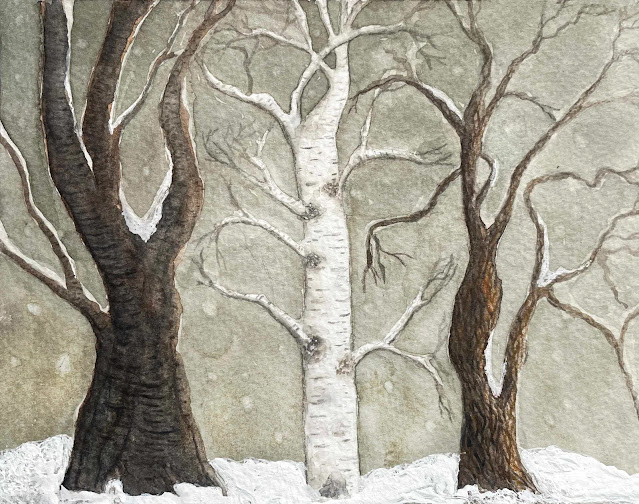
 I am honored to have one of my haiku accepted for publication on Pure Haiku.  The theme was this image prompt.  The link to Pure Haiku became live today, and the haiku is below. https://purehaiku.wordpress.com/2024/02/09/2-9/ credit: Elisa Ang 2 – 9 the gods are absent freezing snow falls with no check the shrines all empty © Lisa Smith Nelson 2024 The gods being absent, and the shrines empty, refer to the Japanese season of early winter (in November), and the kigo phrase " the gods are absent ."  This is the season after the harvest when the Japanese gods have finished their duties and have left the shrines for a well deserved rest.  They gather to celebrate at the Grand Shrine of Izumo, one of the most important and ancient of the Japanese shrines, leaving all the others empty. 

Untitled Haiku - February 5, 2024

Image
Ronovan Writes Weekly Haiku Challenge #500 words: story and wane photo: my life's story told in forward and backward steps in waxes and wanes   ©2024 Lisa Smith Nelson. All Rights Reserved  #haiku #ronovanswrites #weeklypoetryprompt #syllabicpoetry #japanesepoetryform 

24 Seasons: Ritto (The Beginning of Winter) No. 7

Image
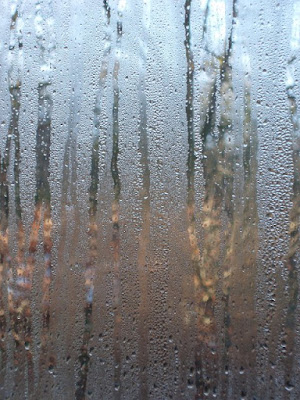
  Tanka Tuesday 24 Seasons Syllabic Poetry Challenge No. 7    The Beginning of Winter (November 7 – 21) Ritto 立冬 "... choose a kigo word or phrase from the seasonal kigo list on the post, or you can choose from the autumn category... Share your kigo word on your post ." I have chosen " ramen " from the list In Our Lives , and " close the north windows ," found here . image close the north windows  let the panes fog with the steam  of fragrant ramen  ©2023 Lisa Smith Nelson. All Rights Reserved #tankatuesdaypoetrychallenge #tankatuesday24seasons #haiku  #kigo #japanesepoetry #24seasons #ritto

The Wind

 Tanka Tuesday Weekly Poetry Challenge No. 297 Reena's choice for this week's specific form is the kouta, a Japanese four-line form.  New wind chimes tink in the night louder than by day. I will have to take them down, keep neighborhood peace. The neighbor's dog barks again, to hear its own voice. To its owner my wind chimes tink to wake the dead. I'd rather hear the chiming than wee hour woofing. Nestled in warm patchwork, it's the wind's own music. ©2022 Lisa Smith Nelson. All Rights Reserved #tankatuesday #poetryform #koutapoem #kouta #syllabicpoetry #syllabicpoem #fourlinepoetryform #fourlinepoem #japanesepoetryform #japanesepoetry #wirtingprompt #poetryprompt

Z - Zappai

  A Japanese form, you may see Zappai referred to as "pseudo-haiku," and while it does have the 5/7/5 syllable pattern, a zappai never contains any seasonal or nature references.  You could say it's a senryu then, but senryu relate to human nature, in a ironic or humorous way, and a senryu doesn't have the strict adherence to the 5/7/5.   Haiku societies are quick to dismiss the zappai as being "doggeral verse" with  little literary value.  The Zappai    Some call it pseudo- Haiku, although it has no Seasonal reference.   ©2021 Lisa Smith Nelson. All Rights Reserved